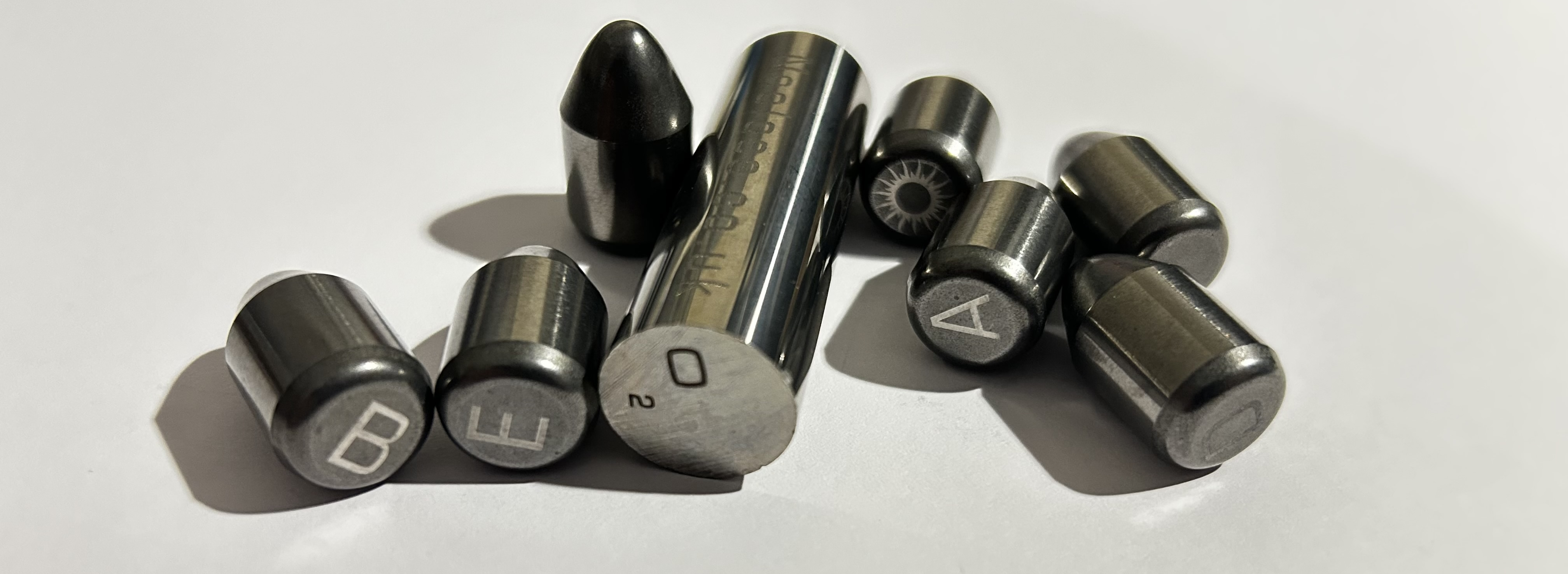
How Neolase, a Sheffield laser marking subcontractor, laser-marks tungsten carbide components for downhole drilling in oil and gas exploration.
Neolase Ltd, a laser marking and engraving subcontractor based in Sheffield, UK, laser-marks tungsten carbide, one of the hardest engineering materials, for downhole drilling in oil and gas exploration. A laser never touches the part, so the extreme hardness of tungsten carbide, which quickly wears out conventional marking tools, is not a barrier to a permanent mark.
| Customer | Downhole drilling tool manufacturer, drilling Teeth manufacturer |
|---|---|
| Industry | Oil and gas exploration, downhole drilling |
| Material | Tungsten carbide |
| Component | Drill bit inserts or wear parts |
| Quantity | Varies, from 1 pcs to dozens per batch |
| Marking | Engraving on non sensitive part of the product |
| Mark applied | serial number, part number, batch number |
| Turnaround | 24 Hrs |
| Done | Occasional |
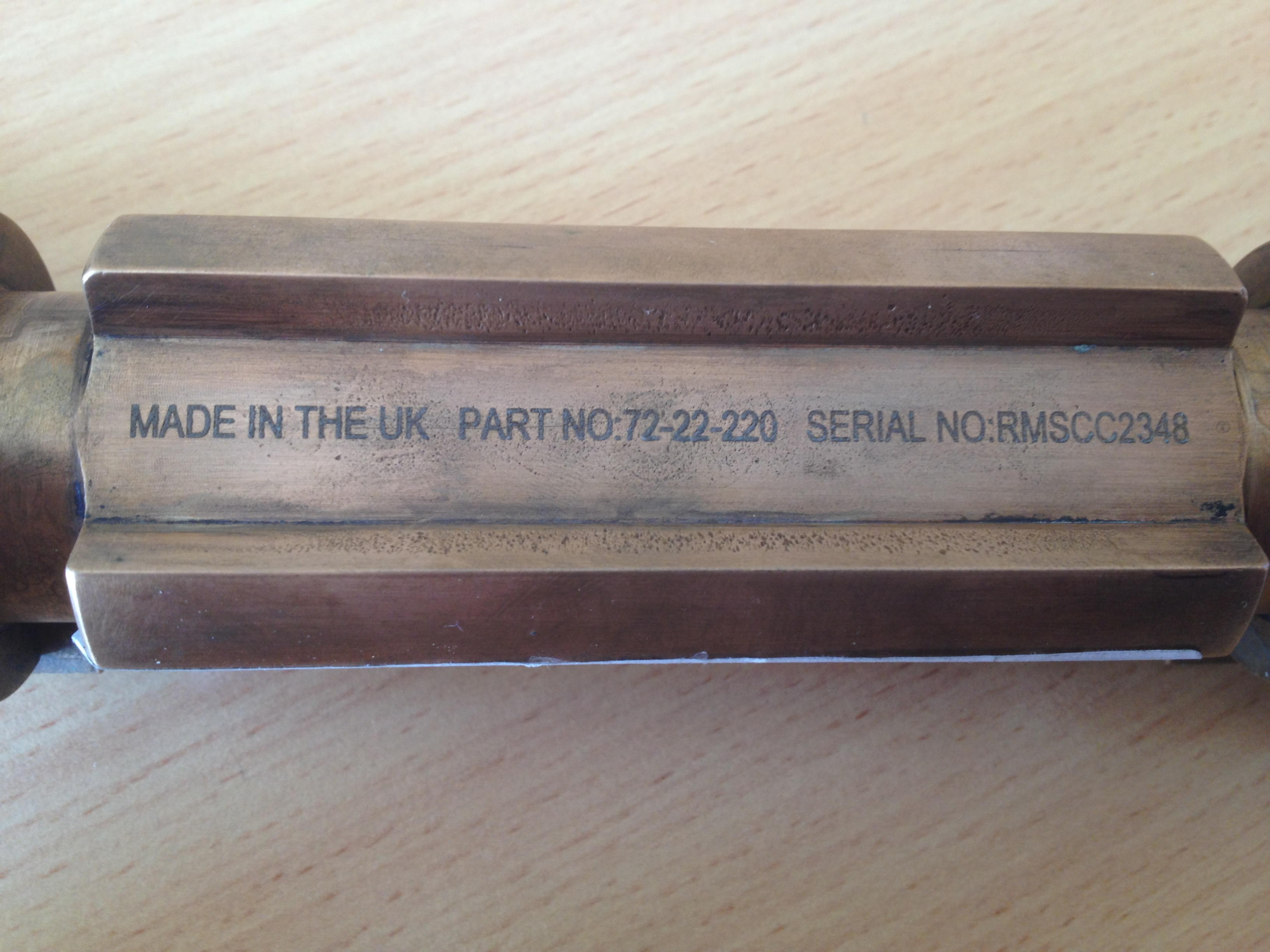
Tungsten carbide is chosen for downhole drilling because it is one of the hardest materials available, able to cut through rock where ordinary steel would wear out. In oil and gas exploration, components like these have to be identified and tracked.
That hardness makes the material very difficult to mark. Conventional engraving tools and stamping struggle against it, so the customer needed a marking method that could leave a permanent, readable mark on tungsten carbide.
Neolase, a laser marking subcontractor based in Sheffield, uses a laser to mark the tungsten carbide. A laser is a beam of light, so it does not touch the part, and there is no tool to wear down against the hard surface. How hard the material is does not stop the laser from marking it.
The mark is made in the surface of the part itself, so it is permanent and cannot be rubbed away. Neolase draws on its long experience of laser marking to choose the settings that suit the material.

For the customer, laser marking its tungsten carbide components with Neolase means:
| Benefit | What it meant for the customer |
|---|---|
| Marks the hardest materials | The laser marks tungsten carbide, one of the hardest engineering materials, where conventional marking tools struggle. |
| No tool wear | The laser never touches the part, so there is no cutting tool to wear out and no changing of tools. |
| Permanent | The mark is part of the surface of the part, so it cannot be rubbed off. |
| Identifiable parts | Each component can carry a readable identification mark, supporting tracking through the supply chain and in the field. |
| Specialist knowledge | Neolase's experience of laser marking difficult materials means the right settings are chosen for tungsten carbide. |
If your parts are made from tungsten carbide or other very hard materials, tell us the material, the quantity and the mark you need. We will advise on what is achievable and mark a free sample first.
Related: Case study 01: on-site marking of 660,000 tools Case study 02: Jewellery marking Case study 03: automotive rubber laser marking Case study 04: electronics components laser marking Case study 05: medical instruments laser marking Case study 06: personnalisation : memorial plaque laser marking Case study 07: security, temperproof labels laser marking Case study 08: hard metal laser marking Case study 09: dog tag laser marking - Laser marking FAQ - Pricing and gallery - All case studies
Tell us your material, quantity and the mark you need. We will quote within 24 hours, with a free sample marked before you commit.
Phone: +44 (0) 7557 278 390
Email: contact@neolase.co.uk
Address: 128 Blair Athol Road, Sheffield, S11 7GD
★ FREE SAMPLE MARKING ON ALL ENQUIRIES